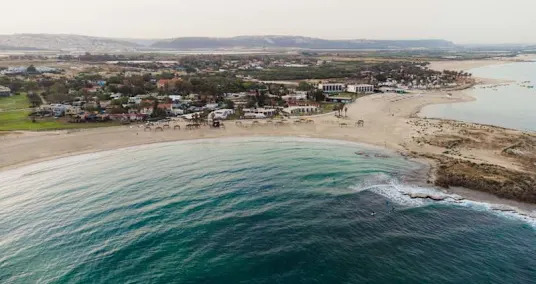
The discovery was made in an ancient shipwreck in the Dor Lagoon near the Carmel Coast, where archaeologists recovered nine pieces of unprocessed iron known as “blooms.”
Researchers from the University of Haifa said Wednesday that an underwater excavation off Israel’s northern Mediterranean coast uncovered what they described as the earliest known cargo of raw iron transported by ship, dating back around 2,600 years, Xinhua reported.
The discovery was made in an ancient shipwreck in the Dor Lagoon near the Carmel Coast, where archaeologists recovered nine pieces of unprocessed iron known as “blooms.” According to the university, the find provides direct evidence of how iron was transported in its earliest commercial stages.
The material was preserved in its original form, having solidified directly in a smelting furnace without undergoing forging or further refinement. Researchers said this distinguishes the cargo from later iron artifacts that typically show signs of shaping or tool-making.
Unlike copper and bronze, which could be melted into liquid form in ancient production processes, iron was heated with charcoal to produce a solid, porous mass. That mass was generally hammered to remove impurities and create denser material suitable for tools and implements.
The recovered blooms showed no indication of that secondary processing stage, suggesting they were transported immediately after production.

Earliest iron shipment discovered in ancient Mediterranean wreck
To determine the age and condition of the cargo, researchers conducted microscopic and chemical analyses.
Radiocarbon dating was also carried out on charred wood embedded in one of the pieces, helping confirm the timeline of the shipment. The findings were published in the journal Heritage Science.
Researchers said the cargo indicates that iron was being moved in raw form from production sites to other locations for further processing, pointing to a level of specialization in ancient manufacturing and trade networks in the Mediterranean.
The University of Haifa said the discovery provides new insight into early iron production and distribution practices in the region.
LATEST POSTS
- 1
 Kids get diseases like lupus, too. As researchers hunt better treatments, this camp brings joy
 - 2The Secret Side of Italy: 12 Underrated Destinations Locals Don’t Want Tourists to Find
- 3Vote In favor of Your Favored Language Interpretation Administration
- 4RFK Jr. guts the US childhood vaccine schedule despite its decades-long safety record
- 5Want to make America healthy again? Stop fueling climate change


- NASA is sending astronauts back to the moon. Can you see the Artemis 4 landing sites from Earth?
- Dozens injured in Russia after train crashes, overturns
- Russia patents space station designed to generate artificial gravity
- Vote in favor of your #1 sort of juice
- Eli Lilly to build $6 billion Alabama plant as part of US manufacturing push
- Picking the Right Doctor prescribed Medication Inclusion in Senior Protection.
- Iran war upends aviation strategies
- How to get tickets to Jay-Z’s sold out Yankee Stadium shows
- What to watch for as NASA’s historic Artemis II crew prepares to lift off toward the moon